featured
Let's Give Loris Karius A Fresh Start

Every goalkeeper knows the name Loris Karius.
Scratch that.
Everyone in football knows the name Loris Karius.
Since his final competitive appearance for Liverpool, the name has carried a weight, for all the wrong reasons. Karius has become a shadowy metaphor for the pitfalls of high profile mistakes as a professional goalkeeper. He has lived the nightmarish downfall of a promising number one from one of the world's greatest goalkeeping stocks, Germany's goalkeeping dynasty.
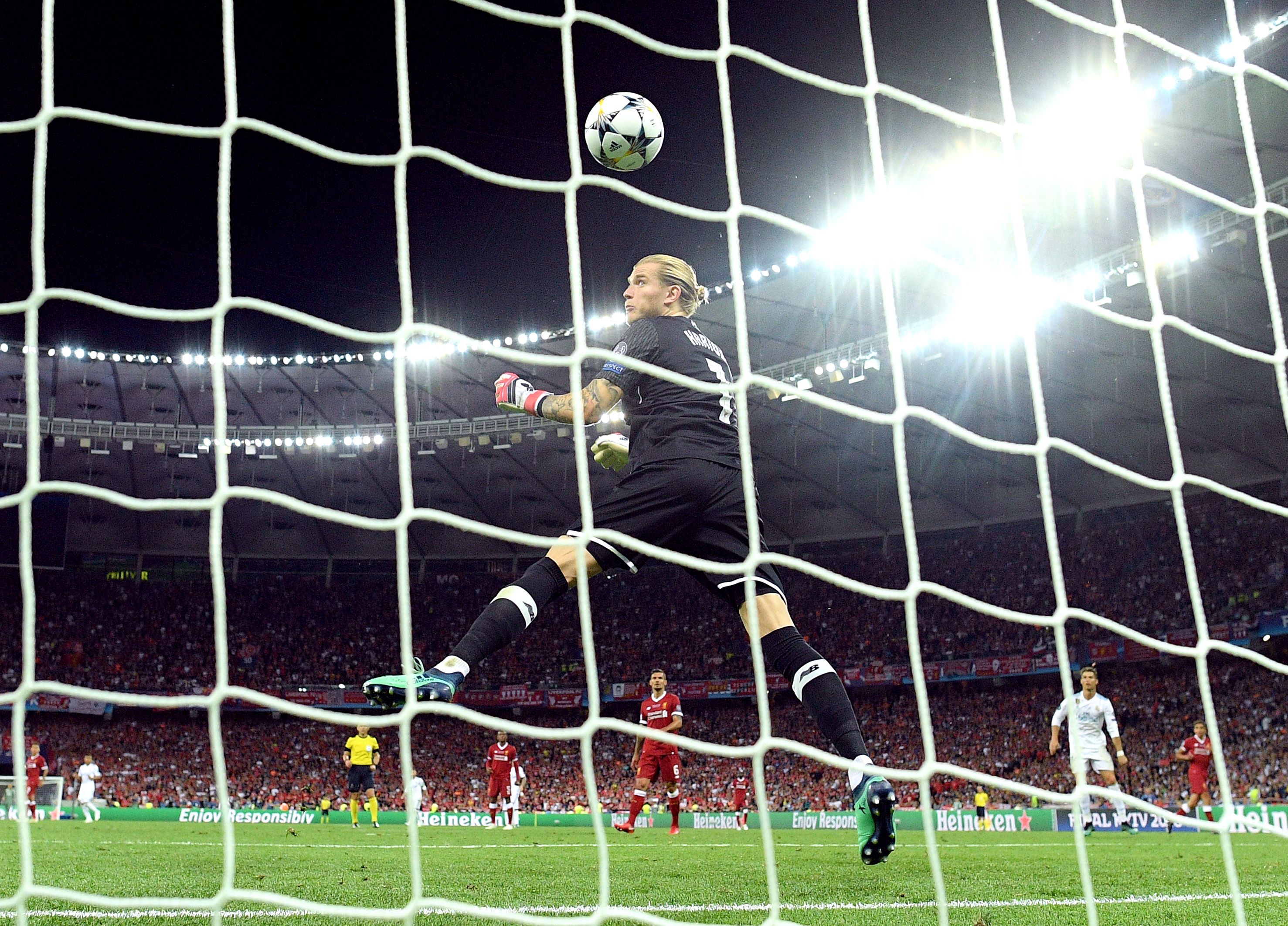
The German was the straw that broke the camel's back when it came to Liverpool's necessary move for a shot-stopper who could make the number one spot their own. The Reds' first Champions League Final since 2007 ended with a Liverpool name in newspaper headlines the next morning, but the corresponding image was the antithesis of positivity.
The footballing world doesn't need a retelling of the story of Loris Karius, or the goalkeeping events that compounded a disappointing night in the Ukrainian capital of Kyiv. Nor does Karius himself; that night would have replayed through his mind more times than is likely healthy.
But, time is a healer. And some time has passed since Karius last stepped onto the pitch in a Premier League fixture. Now 29, the German will likely be returning to the top flight, this time in the North East, with Eddie Howe's Newcastle United calling for a new number two goalkeeper.
As the life of a goalkeeper goes, you have to take your chances when you get them. Carpe Diem is an appropriate slogan for anybody waiting for their chance between the sticks, and seizing the day is exactly what Karius will have to do if Nick Pope finds himself injured or out of form this season. However, the nature of anticipation that will hang around St James' Park if and when Karius' first ventures back over the white line in a Premier League game is up for debate.
But what good does it do to hold onto the past in Karius' case?
*
“What can I say? Loris knows it, everybody knows it. It’s a shame in a game like this and after a season like this. I really feel for him; he’s a fantastic boy,” mused Jurgen Klopp after Karius' Kyiv performance.
“Nobody wants that, (but) that’s the situation. The mistakes were obvious, we don’t have to talk about that, it’s all clear; he knows it, I know it, you all know it".
He knows it, I know it, you all know it. Klopp's words ring true to this day. The sentiment of his reflections was matter-of-fact, in typically Klopp-esque style, but perhaps this is the narrative approach we need to take as Karius returns to England.
After all, there are practical analyses we can make when commenting on the 29-year-old's history ahead of his move to Newcastle. For one, Karius returned a positive PSxG +/- of +1.7 over the 19 games he played in the 2017/18 season, with some strong performances along the way. He outranked both Hugo Lloris and Ederson in this statistical category, posting the same numbers as Petr Cech.
In his first season at Turkish side Besiktas - the club Karius joined on loan in the aftermath of the fateful Kyiv final - he did indeed put in a string of strong performances. Besiktas' financial issues in his second year in Turkey turned the move sour, with Karius eventually terminating his deal and returning to Merseyside.
Some pointed to an apparent lack of motivation or enthusiasm in Karius' second year with Besiktas which was criticised by fans and pundits alike, regardless of the ongoing contractual turbulence; Besiktas had failed to pay Karius four months worth of wages. Whatever your take on the health of footballer's bank accounts, it was an issue that would have understandably drawn Karius' focus away from what was happening on the pitch.
The battle that ensued between club and goalkeeper was sour, with Liverpool backing their player and Besiktas smearing his name. It was a wholly negative end to what had, at the start - much like upon joining Liverpool - seemed like a promising move for Karius.
Bad luck can seem like a weak excuse for an underperforming goalkeeper, yet Karius had his fair share of what we could call suboptimal circumstance. In the September of 2020, Karius returned to his homeland to join Union Berlin on loan. As per The Athletic, “He was a bit unlucky during his time here”, German football journalist and author Christoph Biermann said.
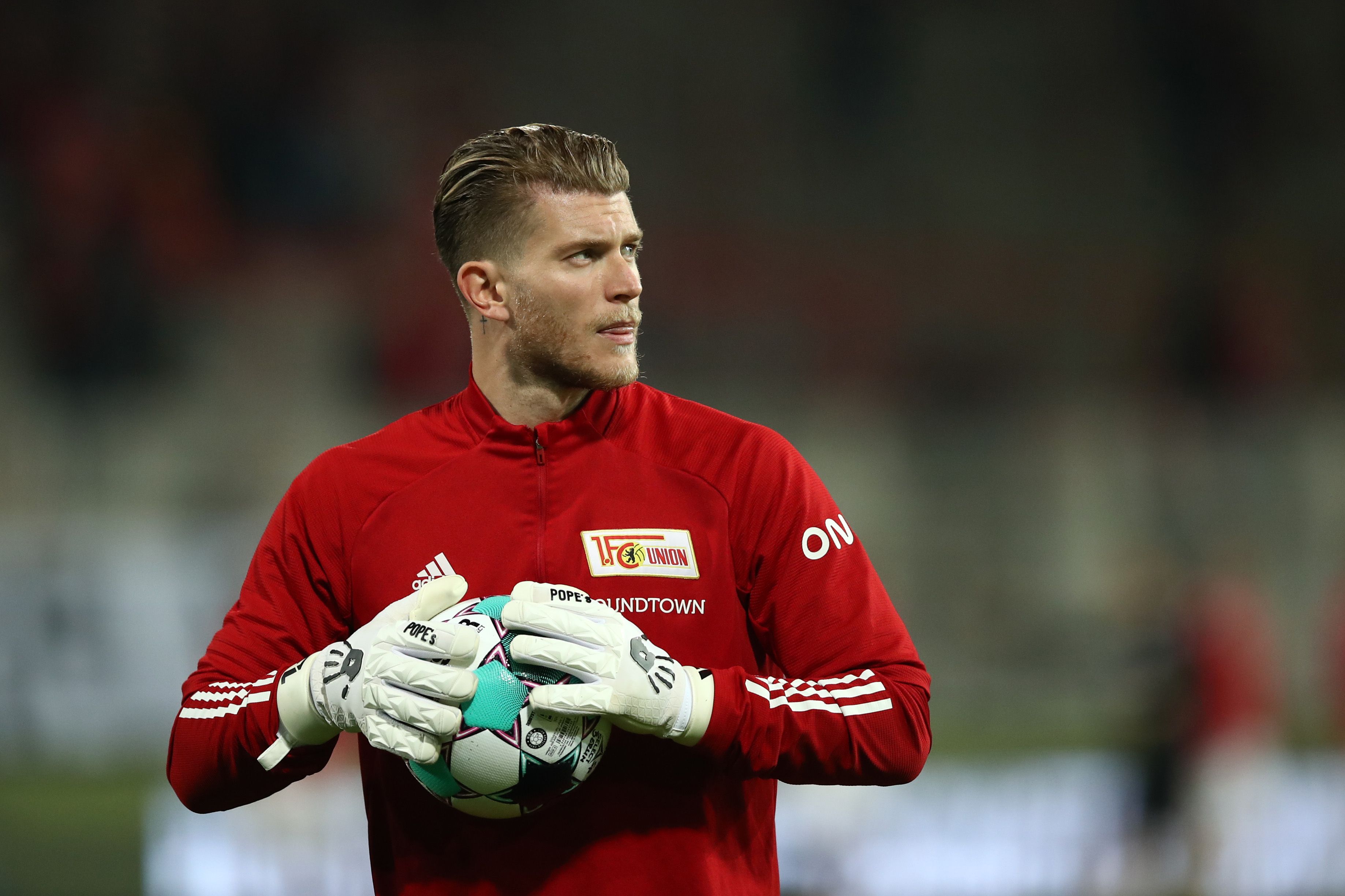
“Union brought in two keepers last summer [and] everyone expected that Karius would become the No 1. But he was the last to arrive and that meant [Andreas] Luthe had his chance. Luthe did well and Karius couldn’t get into the team.
Biermann alluded to a solid run of outings with Union Berlin. “He didn’t make any big mistakes and he didn’t look nervous. He looked like a reliable No 2. I know that the goalkeeper coach was happy with Karius”. On balance, Karius has made mistakes - big mistakes - in games he has played, but over the course of his career he has arguably been relatively solid on the whole.
*
It is true that Karius has lived a celebrity lifestyle. Famous girlfriends (and general friends for that matter), not camera-shy, and with the media keeping tabs on any news surrounding him since his nightmarish Champions League performance, he has indeed played his part in remaining in the spotlight. Besiktas fans were said to have viewed his transfer with excitement, given his relative status after his run at Liverpool over the 2017/18 season.
Whether this has helped his cause has been up for debate, and a point of contention in the past.
Upon returning to Liverpool from his loan at Union Berlin over the 2020/21 season, Karius found himself part of a reformed a rejuvenated goalkeeping department. Alisson, his replacement as number one, was at the peak of his game, with veteran number two Adrian, and promising youngsters Caoimhin Kelleher and Marcelo Pitaluga an entirely new set of faces. It was a renewed department compared to the faltering union that had seen an contentious and underwhelming tussle for the number one shirt between Karius, Simon Mignolet, and less-so, Danny Ward.
Competition within a goalkeeping department is always necessary, yet Liverpool's union, over the 2017/18 season, smelt of underperformance. Despite the expertise of John Achterberg undoubtedly preparing the group well each week, Mignolet and Karius did, pretty much, struggle to create and maintain a pecking order. One could argue that with Alisson very much the concrete number one - and performing generally at such an elite level - each and every goalkeeper is driven to compete to a standard well above their own stations.
The dynamic between Mignolet and Karius represented something of a goalkeeping stalemate. Neither really claimed the number one shirt, but not in a positive sense. Mignolet's professionalism cannot be called into question during his time at Liverpool, but it is noted he did indicate a sense of dissatisfaction around being out of the team despite Karius failing to pull up trees.
There is perhaps now more of a sense of aspiration in the Anfield goalkeeping group. A mantra that ‘if Alisson’s that good, let's make him prove it'. Likewise, the structure of the union at Liverpool today is very much one of masters and students. Adrian acts as the veteran personality, well-loved and hardworking. Kelleher could well become Liverpool's number one the day Alisson moves on. Pitaluga is promising, and Alisson himself is the best in the world. This is the environment, spurred on by Achterberg and now also Claudio Taffarel, that Karius worked in for the final months of his Liverpool career. He has been in good hands, and a good environment of success and peak performance.
Klopp himself reaffirmed Karius positive reaction to this environment, telling Liverpool's website that “[Karius is] doing absolutely nothing wrong, who is in a really good shape, who is training very hard. He is committed, the goalie coaches are fully committed, that’s clear”.
It was no surprised to player or public that Karius was released at the end of his contract this summer just gone. However, with it seeming likely that he'll be back in the big time this autumn - albeit almost definitely on the bench - we as fans and pundits need to think of Karius' chequered footballing past as exactly that; the past.
There's enough evidence out there to point to Karius' capability. He perhaps joined Liverpool too young, drawing parallels with Kepa Arrizabalaga's struggles at Chelsea. The German himself has commented in the past on how he has put Kyiv behind him. How true that is is debateable, but time is a good healer. Loris Karius will be a different person, and goalkeeper, to the one the Premier League saw back in 2018.
After all, who doesn't love a goalkeeper proving the media wrong? Let's challenge the narrative: it's time we give Loris Karius a fresh start in English football.
Long-form goalkeeping writing, delivered to your inbox. No spam. No outfield content. Just depth.
Tagged
Continue reading
The top goalkeeper news stories from 17th May - 24th May 2026World Cup Winner adds another trophy to his collectionLast Wednesday, Aston Villa travelled to Istanbul for their Europa League final vs Freiburg. Villa were endeavouring to end a long trophy drought against the German side. Unai Emery’s side ultimately dominated the final as they won 3-0, and it was a night to remember for Emiliano Martinez as he added another trophy to his impressive collection. Moments of the month: when Emi Martínez became a Europa League winner 🥹🏆 pic.twitter.com/1ZGYeCWI0d— Goalkeeper.com (@goalkeepercom) May 24, 2026 Before the COVID-19 lockdown, Martinez had been struggling for gametime but only six years later, he has bagged himself a World Cup, two Copa Americas, a Europa League, and two Yashin awards, amongst other honours.. What a fantastic five years for Dibu. Hull make it to the promise land after costly errorOn Saturday, Hull faced Middlesbrough at Wembley with the possibility of returning to the Premier League after 10 years. The Play-Off Final was already a point of great controversy following Southampton's expulsion, and the game didn't look like it would be befitting of the drama of the days leading up to it. The tie was sizzling out in the dying embers as the scoreline read 0-0 with clock ticking towards extra time. "Oli McBurnie, he's got the EYE OF THE TIGER!" 🐯🔥 pic.twitter.com/mbu5sxtTVc— Sky Sports Football (@SkyFootball) May 23, 2026 But, in the 95th minute, Hull were on the attack and a ball, which flew towards Boro goalkeeper Sol Brynn, was flapped at at the mercy of striker Oli McBurnie who pounced and buried the ball into the back of the net. It was an unfortunate error for Brynn with the goal condemning Middlesbrough to another season of Championship football.Teammate Aiden Morris said 'Sol makes that catch nine times out of ten. You go down the other end and we could have scored more goals, or we could have done something to stop the cross. There’s tonnes of things.'Which goalkeepers have made the England World Cup squad?On Friday, Thomas Tuchel announced his England squad for the World Cup. There was a lot of controversy surrounding the outfield omissions, but we were more focused on the three choices between the sticks. Jordan Pickford, Dean Henderson and James Trafford were the three names selected to represent their country in the States - hardly a surprise. Do you think England have one of the world's best goalkeeper departments? Liverpool goalkeeper rumours continue to swirlSunday marked the official end to Andy Robertson and Mohammed Salah’s Liverpool careers, playing their final game at Anfield. However, another departure rumour that continues to swirl is that of Alisson. Juventus are reportedly planning to swoop in for the signature of the Brazilian, who was called up for his nation’s World Cup squad last week. Will Alisson stay at Merseyside for another season, or will he make a return to Italy?Kinsky continues redemption arc as Spurs survive Tottenham Hotspur's final day victory over Everton meant that the North London club had secured another season of Premier League football. One man who has been integral to their survival in the last few games of the campaign in young Antonin Kinsky. Since the well-documented Atletico Madrid debacle, Kinsky has been in solid form, and pulled off another great save on Sunday to maintain the lead. What a save from Kinsky in a crucial game against Everton 😮💨🧤 pic.twitter.com/cFAM19gmWQ— Goalkeeper.com (@goalkeepercom) May 24, 2026
New FA Rules are expunging keepers in favour of technical growth in the first stage of organised youth football.Goalkeeping, like life, is not always a linear pathway. It is such a highly specialised position with a skillset that requires a commitment to isolation in mindset and presence. Some are born to be in nets. Others find out by chance that the different coloured jersey was meant for them. “Amazing to see how much the goalkeeper union has grown over the last few years, record numbers across academies, grassroots and youth pathways are choosing to be goalkeepers in all corners of the globe. Goalkeeping is cool,” Mary Earps posted on her socials last year. She’s right, but when should a budding goalkeeper first enter the ’cool’ box? The jury remains somewhat out on that, after the Football Association recently announced that goalkeepers would be removed from the earliest stage of organised football next summer.From the beginning of the 2026-27 season, children in the under-7 bracket will adopt a new three-a-side format with smaller pitches and no goalie. All six players are 'active, engaged, outfield players’ where each child has the opportunity to ‘grow their skills and join the attack and defence.’No keepers in U-7s football will be 'catastrophic' https://t.co/ee7f66fEoG— BBC Essex (@BBCEssex) April 13, 2026 According to the FA, the plan is to give everyone more touches of the ball. But it is a decision that has caused some waves in goalkeeping circles. “If a child naturally gravitates toward being a goalkeeper, it’s worth asking why we would take that opportunity away from them,” suggests Rangers’ current Head of Academy Goalkeeping Conor Brennan.“The intention behind rotating positions is understandable, giving players more touches and broader experiences. However, in doing so, we risk losing valuable time in developing the unique psychological attributes required for goalkeeping”, Brennan insists.There is an argument that rotation prevents early typecasting. Youngsters can explore different positions before finding their niche. There are numerous anecdotal stories of an outfielder becoming the accidental goalkeeper in their teens. One of the true greats, Lev Yashin, once said: 'I wanted to be a forward – I was always dreaming about hitting goals – but gradually I got moved back and back until I became a goalkeeper.' Not a bad career move for a Ballon d’Or winner. A year that was technically lost in development can be alternatively framed as 12 months spent in understanding the game from a different perspective“To assume that you can only build a goalkeeper from seven, or influence a goalkeeper from that age is pretty wild,” claims Dan Tumelty-Bevan, Head of Academy Goalkeeping at Birmingham. “To get seven-year-olds into environments where there’s more capacity to enhance skill movement and development is a positive. I think refining that as you go through the ages will give more opportunity for athletes to be goalkeepers.”Gianluigi Donnarumma began in ‘the gate’ at the age of five, playing around with his elder brother and uncle. 'I was never afraid. Maybe that's why I chose goalkeeping,' he has mused. That's exactly the point that Brennan makes. Being thrown in at the deep end is the way to learn the lone eagle of the game.“Building bravery (such as the willingness to put their body in the way of the ball), experiencing the emotional highs of saving a penalty, and learning to handle the inevitable highs and lows all come with being the last line of defence.”“These experiences are not dependent on formal coaching; they are developed organically through repetition and exposure. By delaying this process, we may unintentionally hinder the development of these crucial traits.”We are always told that children are resilient. So why not test the theory at the earliest opportunity to make a head start on the rest? Pitching youngsters into the hero and villain goalkeeping cycle is something that can appeal to a certain DNA. Dean Henderson recently told Goalkeeper.com that he loved “breaking hearts” from the very beginning. There must be something in that.The fear expressed out loud by coaches is that youngsters who are predisposed to the art of goalkeeping might be lost to other sports.Idrees Afzal, PhD, is a human performance scientist, analyst, and conditioning coach who has worked at Bradford City, within county cricket circles, and alongside national badminton Federations. He is certain that there is a bigger positive to multi-skilling across disciplines from a skill acquisition angle. “Could it help support certain coordination patterns and movement patterns because players haven't got gloves on at a young age and they start learning new things? That's one take on it”, he says. “The other take is simply how representative will this change be in terms of what a goalkeeper will need to do”? Afzal also touches on the holistic element of goalkeeping development. “Is having the gloves on a haptic - a perception relating to a sense of touch? Do young players need to feel what it's like to actually be in goal during a game? Will there be that same perception and action of things that are going on in the scenario as opposed to not having goalkeepers in U7s? Those would be the two big elements that stand out for me. “It could potentially help with a goalkeeper’s ‘possession skills’. But if that's going to be the case, then it needs to be facilitated by either a coach or a referee in a certain way to allow those adaptive behaviors to take place. If it's just going to be a goalkeeper with no gloves standing near the net, it might defeat the whole purpose.”Afzal speaks a lot about ecological dynamics in relation to the question at hand. The theory emphasises that movement and decision-making emerge from the continuous, dynamic interaction between the individual, the environment, and the task.Image Credit: Fabian Otte LinkedIn“Gaining a variety of physical components in terms of your strength, power, and mobility, is going to be really good for a young person. Having exposure at a young age to different aspects of perception and motor learning with the likes of a golf or tennis ball, for instance, is important.”Brennan isn’t so sure. “Other sports, such as hockey, GAA, futsal, and handball, offer young players the opportunity to specialise as goalkeepers from an earlier age. If a child has a strong desire to play in that role, but feels restricted within football, it is reasonable to question whether they may be drawn toward alternative sports where that identity is encouraged.” On the other hand, Yashin tried the high jump, shot put, discus, took fencing lessons, had a go at boxing, diving, wrestling, skating, basketball, ice hockey and water polo. He didn't even want to be a footballer at one point. There is also simply the question of: does this actually matter, for one year of a child’s football career? Afzal believes so.“It's 12 months. That's a lot of time for the development of a young person's mind. I think it all matters. Any exposure, any experience that young athletes are having is really important”, he opines.In these days of competitive parenting and results matter narratives, it would be easy to make the young goalkeeper feel the weight of that responsibility rather than enjoy it. The 3 v 3 structure is key in imparting technical learning when the young mind is open. There are no official results or tables, ensuring a sense of freedom in a fun environment.Afzal has an interesting thesis on what the authorities are really driving at. “It might be a philosophical mindset. Maybe the FA wants our players to be technically good on the ball. Is that going to develop in a young player’s game if they’ve just got gloves on their hands and they’re just stationary, or just stuck to being in the nets?”Of course, this all could backfire. Children are sure to be watching a magical save during the World Cup and think: “I want to be (insert famous goalkeeper name here) right now.” Is the moment being stolen? The new format is about individual actions and not positions.Tumelty-Bevan insists that the broader view wins the day: “People can be so focused on this idea that everything has to look like a mini version of where it’s going to. It doesn't.” The next generation will tell us something about both sides of this story. Goalkeeping is cool. Maybe hothousing can wait.
Play-Off Final winning goalkeeper Ilić discusses the nature of one of football's most unique matches. It’s 1998, and the greatest Play-Off Final of all time seems like it’s never going to end.Charlton Athletic striker Clive Mendonca has bagged the first ever Play-Off final hat-trick against his boyhood club, Sunderland. His teammate Richard Rufus has scored his first ever senior goal. The only problem is that Addicks goalkeeper Saša Ilić, who had kept nine clean sheets in a row leading up to the final, has also conceded four.Both goalkeepers have had just as little luck in the ensuing penalty shootout. 13 penalties have been taken, and 13 penalties have been scored. So, as Sunderland’s Michael Gray steps forward for yet another do-or-die spot-kick, Ilić decides to take a new approach.He decides to leave it up to chance.“Towards the end of the penalty shootout, you get sort of frustrated,” he tells Goalkeeper.com. “You’re going one way, the ball’s going the other way. It just doesn’t seem like it’s going to come to an end. And I saw this coin on the pitch on the right side of the post.“So I sort of flicked it, and I’m like ‘Okay, because I’m not having any luck saving these penalties, if it’s on heads I’ll dive to my left, if it’s tails I’ll dive to my right.’ Fortunately, it went on heads!”One dive later and Charlton were going to the Premier League.Happy 53rd Birthday to former Charlton Athletic goalkeeper, Mr Sasa Ilic. Have a great day @sashailic1 cafcpic.twitter.com/OjMLgiPjVx— CAFC Facts & Stats (Stuart Court) (@CafcFacts) July 18, 2025 Much like the coin, it was a series of coincidences which meant that Ilić had even made it to Wembley in the first place. As a Serbian-Australian living in the former Yugoslavia during the bloody civil war in 1996, Ilić visited his sisters in London. On the last night before he was due to return to Belgrade, he got chatting to Sheffield United midfielder-turned-marketing-manager Mike Trusson at football-themed restaurant Football Football.Within a few months, Ilić had moved permanently to London and was playing seventh-tier football for Trusson’s former club St. Leonards Stamcroft. A year later, having impressed scouts from a number of teams, he was training at Charlton.“I didn’t really have much money,” he remembers. “My sisters would lend me some money to jump on the train from where they were living in Putney. So I had to commute from Putney all the way to New Eltham, like a two-and-a-half-hour trip. And I did that with a huge smile on my face!”His excellent form in training – coupled with an injury to Mike Salmon – meant that, on February 25th, 1998, Ilić made his Charlton debut in a 2-1 win at Stoke. Exactly three months and 12 clean sheets later, his astonishing rise had taken him all the way to Wembley.“It was like I literally fell from the sky into Charlton,” he says. “I didn’t understand the hype of all of it, because I was just sort of thrown into it. It was a case for me where [the Play-Off Final] was just like any other game, and you approached it like any other game. But on the day we travelled to Wembley, we were greeted by 20,000, 30,000 Sunderland fans.“And we got this huge roar – people showing their middle finger, saying all sorts of profanity towards us. And that’s when it kicked in, the importance of the actual game. And obviously, going to the changing room, walking out on the pitch, it was just like a space shuttle in my eyes.”Three hours later Ilić had gone down in history as the man who decided one of the greatest Play-Off Finals of all time. Fast forward 28 years and, after a long career in England, Ilić now lives in Montenegro with his wife and two sons.The Play-Offs themselves, meanwhile, are now 40 years old, and have arguably never been under more scrutiny. In each of the last two seasons, Championship teams have hit the 90-point mark and still not gone up. In the National League, the ever-more popular '3UP' campaign gathered more steam this season as Rochdale amassed 106 points and still needed to scrape a Play-Off final win on penalties to ascend to League Two.From 2026/27, the Championship Play-Offs will expand from four to six teams. Questions have been asked about whether the Play-Offs remain the fairest way of deciding promotion. Ilić, though – perhaps unsurprisingly – remains resolute that they are.“That’s part and parcel of the excitement about football where you’re giving an underdog a chance to grab that trophy,” he says. “I think that’s what makes football super exciting. If you’ve done well throughout the season and you’ve accumulated 20 or 30 points more, on paper you should be winning these games. “But, you know, if you fail at the last hurdle, you’re not ready for it. You’re not ready for it, because you’re going to have a lot more challenging situations in the Premiership or the league above you, if you can’t handle the Play-Off. So, in some ways, it’s a good way to maybe see mentally where these players are.”Ilić is also an expert on what those games can do for a player’s legacy.“A footballer’s career is quite a short career. I think it’s very difficult, even when you’re a professional footballer, to exceed your level. But these sorts of situations can make a player excel quickly, can give a player a bit more recognition if they do particularly well in this one game. Whether that’s a good thing or a bad thing, I don’t know. I just know I’m one of those people that benefitted from that,” he says.“It creates legends, it creates an aura, it creates something for people to talk about.”This year’s Championship Play-Off final has thrown up one of the biggest talking points of all: the ‘spygate’ scandal. But Ilić is not convinced that Southampton should be expelled for their alleged misconduct.“That’s all absurd. I think it’s more paper talk than anything else. If you’ve lost because of a couple of photographs, mate, then… no,” he laughs.In an age when preparations for the Play-Offs are so intense that they can include spying on the other team, it seems unlikely that either Daniel Peretz or Ivor Pandur would have wanted to leave their fate up to the toss of a coin.For Pandur at least, he'll be hoping and praying that his numbers are drawn in this weekend's Play-Off lottery.
Dean Kiely has stood between the sticks - and mentored those who do - at the very top for decades. Adapatability is a virtue - but the standards don't change. November 3rd 2003 It’s a cold autumn night in the West Midlands, and Dean Kiely’s goal is under siege. His Charlton Athletic side have taken the lead through a Matt Holland header, and Birmingham City are launching attack after attack forward in hope of levelling the scores. Kiely makes three sharp saves before the break to maintain the lead. Early in the second half, a floated cross finds World Cup winner Christophe Dugarry’s head just five yards from the Addicks’ goal. The striker makes perfect contact, but Kiely springs into life, clawing the bullet header over the bar. Non-plussed, the Frenchman’s face goes blank before contorting into a rictus of disbelief. That stop would later be named the Premiership’s save of the season in 2003/4, a campaign that would end with the Addicks in seventh place and Kiely being named the club’s Player of the Season for the second time. “When I was at my best, I felt like I played on autopilot,” Kiely tells Goalkeeper.com. “That was one of those days where everything went right. “To see his reaction to it, that’s one of the best feelings you can have as a goalie. To see the disbelief on a striker’s face when you make an incredible save. It’s like you’ve broken their heart.” Kiely’s natural agility and penchant for demoralising opposition goalscorers made the shot-stopper a hero at The Valley. An almost ever-present during Charlton’s seven-year stint in the Premier League in the 2000s, he carved out a career at the very top of the English game after travailing every level of its professional pyramid. “We did some special things. We beat Liverpool, Arsenal and Chelsea. It’s only when you look back on it, that you realise it’s a golden era for the club, and also a golden era for me professionally.” Born in Manchester to an Irish dad and a mum from the Black country, Kiely would eventually pick up football after his parents moved back to the Midlands, initially training with Birmingham before landing at West Bromwich Albion’s academy. At the age of 14, the Baggies put the youngster forward to attend the FA’s National School at Lilleshall in 1985, training with the top talent in the country for two years. On his 17th birthday, Kiely signed his first professional contract with the reigning FA Cup winners Coventry City. Playing in the reserves and youth teams, he was unable to dethrone club legend Steve Ogruzovic. “He showed me the grind it takes to play at that top level. His standards were incredible. I was never going to break into the first team with Steve there, so I was sent out on loan to Ipswich and then York City.” After a couple of months training with the fourth tier club, Kiely made a permanent switch and took over the number one spot. He would go on to make 215 appearances and keep 83 clean sheets for The Minstermen, securing promotion with a penalty shootout save in the Third Division playoff final at Wembley. 🥳 Happy 53rd Birthday to former Minsterman Dean Kiely.We hope you've had a great day, @deankiely40! 🎂YCFC 🔴🔵 pic.twitter.com/3QWjJdTWOB— York City F(C) (@YorkCityFC) October 10, 2023 “From the moment I broke into the first team, I was playing regular professional football for the next 21 years of my career,” says Kiely. “That’s all I ever wanted to do.” Throughout our conversation, the theme of consistency and a commitment to a steadfast work ethic come up, time and time again. After York barely survived relegation from the third tier in the 1995/6 season, a £125,000 switch to Bury beckoned.“What would Bury want from me?” Kiely says, rhetorically. “I would imagine it would be to train and play at a consistently high standard. To perform, and improve to the best of my ability.” They got that in spades. Kiely became a crucial member of the now defunct club’s modern golden era. Winning the Second Division crown in his first season, and helping the Shakers maintain their status in the second tier in his sophomore campaign, he would go on to keep 18 clean sheets in his final term despite the club’s relegation. The shotstopper missed just one game in his tenure, his only absence due to international commitments with the Republic of Ireland. Prior to the 1999/2000 season, Alan Curbishley and his first-team coach Mervyn Day, a former FA Cup-winning goalkeeper, were scouring the market, looking for a goalie that could propel the Addicks back to the Premier League at the first time of asking. With Kiely between the sticks, Charlton would keep 19 clean sheets as they romped to the First Division title, securing their seat at the top table once again. That would be Irishman's final promotion in a career that saw him successfully climb out of all levels of the professional pyramid. Kiely had that sometimes hit and miss virtue in the modern game: the ability to prove a transfer worthwhile. “I can say this now, having been in recruitment meetings as a coach, I would imagine throughout my career, the coaches are saying, ‘we’re alright at goalie’. The evidence says Dean is available and consistent, so we can look at other positions.“Often, a keeper gets parachuted into those teams that come up and they can’t sustain a run of games. “It was the same at York and at Bury. But obviously, the Premier League has that little bit more gravity to it, because of the standard.” Even with the standard of strikers he references as his most fearsome opponents - “Thierry Henry, Wayne Rooney, Ronaldo” - he more than held his own, helping Charlton to multiple top half finishes and bagging a spot in Mick McCarthy's squad for the 2002 World cup along the way. But how did he adapt his game to meet the grade? “My strengths were always my agility, my speed, how I moved around the goal. Everything else had to come up incrementally. Before every game, I’d cross myself, touch the post and repeat the mantra: be positive, be strong, come for crosses, kick well, clean sheet. “I started working with a sports psychologist working on visual cues and visualisation. Like when I played at Anfield, I would visualise kicking towards the scoreboard in the corner of The Kop. I knew if I nailed a kick towards that scoreboard, I’d be ok.” While he initially worked with Day on his drills, he would eventually settle into a working relationship with Micky Cole, a physio turned de facto goalkeeper coach. They enjoyed a collaborative relationship, using Cole’s expertise in the gym to build a position-specific exercise regime. “We were doing things you see a lot on Instagram now, working with resistance bands and plyometric exercises. I didn’t want to bench press, to be built like Arnold Schwarzenegger, it all had to feed back to on-field performance.“I was fortunate to have both. Mervyn who had been there at the top level, and Coley who was just so enthusiastic about goalkeeping but with that strength and conditioning approach.” Kiely’s openess eased the transition to coaching. After short stays at Portsmouth and Luton, he would return to West Brom, eventually taking up the number two spot behind Scott Carson. In his final year as a pro, outgoing goalkeeper coach Joe Corrigan suggested he take on a player-coach role. While Kiely was initially reluctant, manager Tony Mowbray’s counsel opened his eyes to the possibility. “He said, ‘you don’t realise this, but you’re coaching every day. The way you talk to the young players. The way you interact with the staff is really positive.’“I was inquisitive as a player. I wanted to try things. I’m like that now as a coach. I want to set an environment where you have to deliver, but if there’s something you don’t like we’ll discard it. It was like that when I was working with Scott [Carson]. We’d be out there for another 45 minutes or an hour after everyone’s gone in. What did you like about drill? What didn’t you like? We’d be open and honest, because that’s how you get your evidence.” That approach has seen Kiely forge a decade-long career as a goalkeeper coach at both international and club level. Since 2021, he has been a part of Ireland’s set-up. From 2018 until last summer, he was back in south London, this time working with top shot-stoppers like Dean Henderson under the auspices of managers including Roy Hodgson and Patrick Vieira at Crystal Palace. Even with the changes in the top job creating slightly shifting demands, Kiely says he was largely working towards the same principles in his one-on-one work. Hanging on his every word 🗣️When Dean Kiely talks, you listen 🤲GKUnion | WEAREON | COYBIG pic.twitter.com/7bEd6P4BlZ— Ireland Football ⚽️🇮🇪 (@IrelandFootball) March 26, 2021 “If you compare Roy with Patrick, they both play a 4-3-3, but Roy was more defensive and Patrick was more attacking. That means different demands for the goalkeeper, you might have to make more saves. Ultimately, I’m doing the same things most of the time, but with little tweaks in line with what the manager wants.” Kiely is now at Maccabi Tel Aviv, his first time working outside of the UK. At first, he suggests the demands remain the same, although he catches himself at one point. “You don’t go on a coaching course and have a module on what to do if your number three keeper gets called up for national service,” he says, wryly. “Sometimes you have to get off the training pitch because the air raid siren goes up and missiles are being launched. “But you still have to get the football right.” Even in the face of geopolitical interventions in his routines, the basics that saw Kiely make 757 club appearances, keep 246 clean sheets, win 11 caps for Ireland and become a legend at York, Bury and Charlton remain the same. “I’m a Premier League player and coach, an international player and coach. I’m not going to rock up somewhere and be different. They’re the standards, that’s what I bring. Embrace it. If you don’t like something, let’s change it. But let’s crack on, and embrace it.”